
Track & Field windscreen buyer's guide
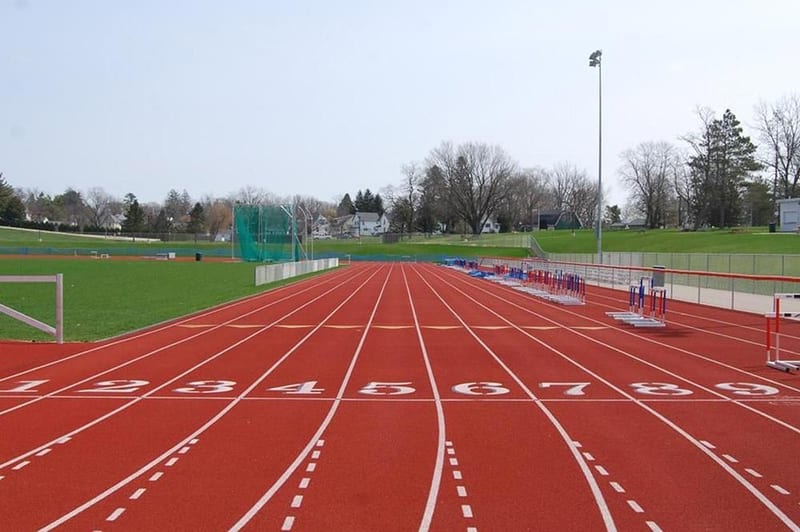
Track buys screening mostly to manage crosswind on the straights and to keep meet infields visually clean. A quarter mile of fence means a quarter mile of wind load, so the screen has to breathe, and placement matters as much as coverage because sanctioned meets read wind gauges.
Key takeaways
- Recommended blockage for track: 89% open mesh along the straights.
- Standard panel to start from: 6 ft × 100 ft on the backstretch, 8 ft × 100 ft on the home straight.
- Keep screening off any fence line where it would interfere with wind readings at sanctioned meets.
- Screens stay up year-round on stadium fence; inspect the grommet lines each spring.
01 Who buys it here
The athletic director or head coach requests it and district facilities installs and maintains it. Meet directors drive the finish-line and sponsor panels, which are printed and go up for the meet. Parks departments buy for community tracks on a season schedule.
02 Sizes that fit this venue
Order to the fence height you measured. Screens are finished 4 in shorter than the fence so the panel sits inside the top and bottom rails, and lengths run in 50 ft sections.
| Fence | Panel | Series | Blockage | Typical use | Price | Configure |
|---|---|---|---|---|---|---|
| 6 ft | 6 ft × 100 ft | 600 Series - Commercial Open | 89% | backstretch run | $579.00 $5.79/ft | Configure |
| 8 ft | 8 ft × 100 ft | 600 Series - Commercial Open | 89% | home straight | $699.00 $6.99/ft | Configure |
| 6 ft | 6 ft × 50 ft | 300 Series - MAXFlex PVC Mesh | 80% | throwing area | $254.50 $5.09/ft | Configure |
| 8 ft | 8 ft × 50 ft | 750 Series - Commercial Block | 95% | finish line panels | $359.50 $7.19/ft | Configure |
03 Blockage for track & field
Exposed sites and the longest runs, where breaking the wind matters more than hiding the infield.
A calm straight and a clean facility edge with the airflow a long fence needs. The pick for most tracks.
Throwing cages, short braced runs and the finish-line panels where you want a solid backdrop.
89% along the straights: it calms the crosswind on the home straight, hides the infield from the parking lot and carries the school's printed panels at the finish line. Exposed stadiums and the longest runs take 80% where breaking the wind matters more than hiding the infield. Throwing cages and short braced runs go to 95% for a solid backdrop.
04 The series that apply
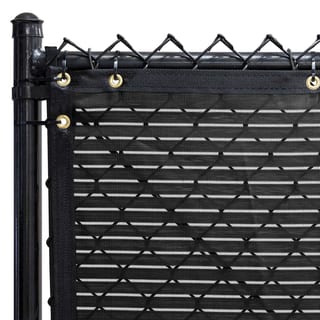
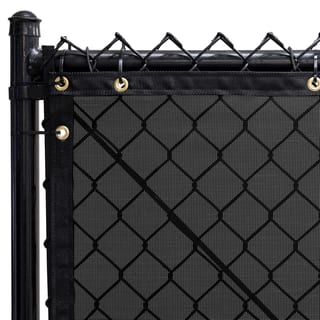
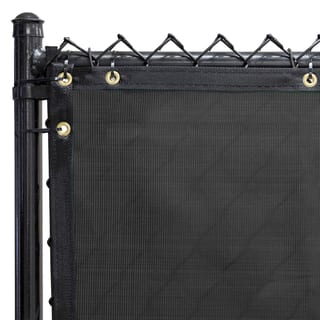
The two or three screens that fit this venue, priced per foot on a 6 ft fence.
05 Install and season timing
Standard 100 ft runs, two-person install, about an hour a panel with UV-rated ties through every grommet. Screens usually stay up year-round, so the spring inspection of the grommet lines is the maintenance. Check the meet rules before screening a fence line that sits behind a wind gauge.
-
Check the meet rules
Placement can affect wind readings for records. Screen the straights, not the gauge.
-
Screen the straights
Crosswind on the backstretch is the real target.
-
Inspect each spring
Repair grommet lines and re-tension before the first meet.
06 Budget worksheet
A planning number for the whole program, priced on 600 Series - Commercial Open before finishing options and shipping.
Questions we get about track & field
Ready to price your run?
The track & field page has the sizes above with the configurator pre-filled, or start from the recommended screen.